
Managing water trucks across multiple simultaneous job sites is different from managing a single project. Multi-site water truck planning adds layers: different dust control needs, equipment movement between sites, overlapping peak demand periods, and growth planning that affects your entire fleet. The complexity is real, but the strategy is straightforward.
This article walks through how multi-site operators think about total fleet capacity, equipment standardization, and strategic purchasing that keeps costs down while keeping all projects supplied.
Assessing Total Capacity Needs Across All Active Sites
Start by understanding what you actually need across all projects, not just what each site needs individually. Proper capacity planning begins with realistic assessment of all concurrent demands.
Create a capacity inventory:
List all active projects. For each one, note: dust control scope, daily water usage, peak demand periods, and seasonal variations. Some sites peak in summer. Others peak when new earthwork starts. Some are constant.
Add up your total peak demand-the moment when all projects need water simultaneously. This rarely happens, but planning for near-peak demand is essential. You need enough capacity to supply all sites during their highest usage periods without severe rationing.
Identify the gap:
Compare your total peak demand to your current fleet capacity. If you have five projects that each need 4,000 gallons on their peak days, and three of them peak simultaneously, your fleet needs to handle 12,000 gallons during that window. If you only have 9,000 gallons of capacity, you have a 3,000-gallon gap.
This gap is your baseline for purchasing decisions. But gaps aren’t the only consideration. You also need buffer capacity beyond your peak demand to account for equipment maintenance, unexpected demand spikes, and the reality that equipment sometimes needs service.
Account for downtime:
Tank maintenance means some equipment is offline periodically. A 20% buffer above your peak demand accounts for normal maintenance and unexpected issues. If your peak demand is 12,000 gallons, you need approximately 14,400 gallons of total capacity.
Standardization vs. Customization in Multi-Site Fleets
Multi-site companies face a choice: standardize all tanks or customize them for specific sites. Fleet configuration decisions should balance standardization benefits against actual site-specific needs.
Benefits of standardization:
Identical tanks simplify operations. Operators trained on one tank know all tanks. Spare parts inventory is smaller. Maintenance is predictable. Moving equipment between sites doesn’t require reconfiguration.
For most multi-site operations, this is the smarter path. One tank type deployed across all projects reduces complexity, training overhead, and parts inventory significantly.
When customization makes sense:
Some sites need specific features. Terrain that requires low-profile tanks. Operations that benefit from particular spray configurations. Projects with unique hazard profiles that justify different setups.
The rule: standardize the core tanks and customize only when a specific site requirement justifies the added complexity and cost.
Strategic approach:
Choose one or two tank configurations that work for most of your projects. Accept that not every tank is perfect for every site. The 80% solution-a tank that works well for 80% of your projects-usually beats having five different configurations for different situations.
Planning for Equipment Mobility and Project Transitions
Multi-site operations move equipment between projects. This adds complexity that single-site companies don’t face. Equipment repositioning between sites requires careful planning around project timelines.
Movement planning:
Know your project timeline. When does current Project A end? When does Project B start? Can tanks move from one site to the other in the window between projects, or do you need overlapping capacity?
If Project A ends in June and Project B starts in July with no overlap, one tank can serve both sequentially. If both run June through August with peaks in July, you need separate capacity.
Map this for all projects. The overlaps show you where you need buffer capacity, and the gaps show you where sequential equipment movement is possible.
Setup and commissioning time:
Moving a tank isn’t instantaneous. Installation, testing, operator familiarization, and integration with site infrastructure take time. Budget at least a week between projects for this transition. Sites that start before previous equipment is operational create bottlenecks.
Equipment matching:
Different project sites have different infrastructure. A tank that works perfectly on one haul road might not fit another site’s layout or operating procedures. Before moving equipment, verify that it actually works for the destination project.
Capacity Buffers for Overlapping Peak Demands
Planning total capacity is harder when multiple projects peak simultaneously, even if those peaks don’t all hit on the same day. Buffer capacity management ensures you can handle peak demand periods without rationing or emergency equipment rental.
Identify overlap windows:
Some months have multiple sites with high dust control demands. Late summer, peak construction season, or specific earthwork phases create periods where total fleet demand spikes. These overlap windows determine your minimum required capacity.
Build buffer for the worst case, not every case:
You don’t need peak capacity for every site all the time. During overlap periods, capacity for all sites at 80-90% of their individual peak prevents rationing while avoiding unnecessary costs.
Manage demand through scheduling:
Work with project teams to stagger major earthwork, dust-intensive activities, or other high-demand operations when possible. Coordinating project schedules reduces simultaneous peak demand and makes your equipment work harder during more hours rather than running underutilized.
Staged Purchasing to Support Business Growth
Multi-site companies grow. You add projects. Your fleet needs to grow with you. Growth-aligned capacity planning keeps equipment costs matched to actual project demand.
Avoid all-at-once purchasing:
Buying enough capacity for your biggest anticipated growth year upfront creates years of underutilized equipment. That’s expensive and inefficient.
Plan in stages:
Year one: you have three active projects needing 12,000 gallons combined. Buy capacity for 14,400 gallons (including buffer). In year two, you add a fourth project. Now you need 18,000 gallons combined. Buy the additional 3,600 gallons needed, bringing total capacity to 18,000.
This staged approach keeps your capital costs aligned with your growth and avoids carrying unused equipment.
Anticipate, don’t guess:
Look at your project pipeline. What projects are likely to be active together? When will you actually need additional capacity? Planning around realistic project schedules beats guessing about future demand.
Coordinating with Project Schedules for Optimal Utilization
Multi-site planning succeeds when fleet plans align with project schedules.
Build fleet plans from project timelines:
Not the other way around. Your equipment needs to serve your projects, not the other way around.
Get realistic project schedules from project managers. Work with them on timing uncertainties. Understand when projects will have high dust control demand and when they’ll be winding down.
Use that information to plan equipment allocation and purchasing.
Regular portfolio reviews:
Project timelines change. Schedules shift. New opportunities emerge. Review your entire project portfolio quarterly. Update capacity plans as timelines change. This prevents surprises and keeps your fleet aligned with reality.
Communication across teams:
Project managers need to know what water truck capacity is available. Fleet managers need to know what projects are coming. Operations needs to know both. Regular communication-even brief quarterly meetings-keeps everyone aligned.
Discussing Your Multi-Site Strategy With Equipment Providers
Multi-site water truck planning is more nuanced than single-project equipment selection.
Discussing your entire project portfolio with equipment providers helps you think through capacity, standardization, and purchasing decisions that actually fit your operation.
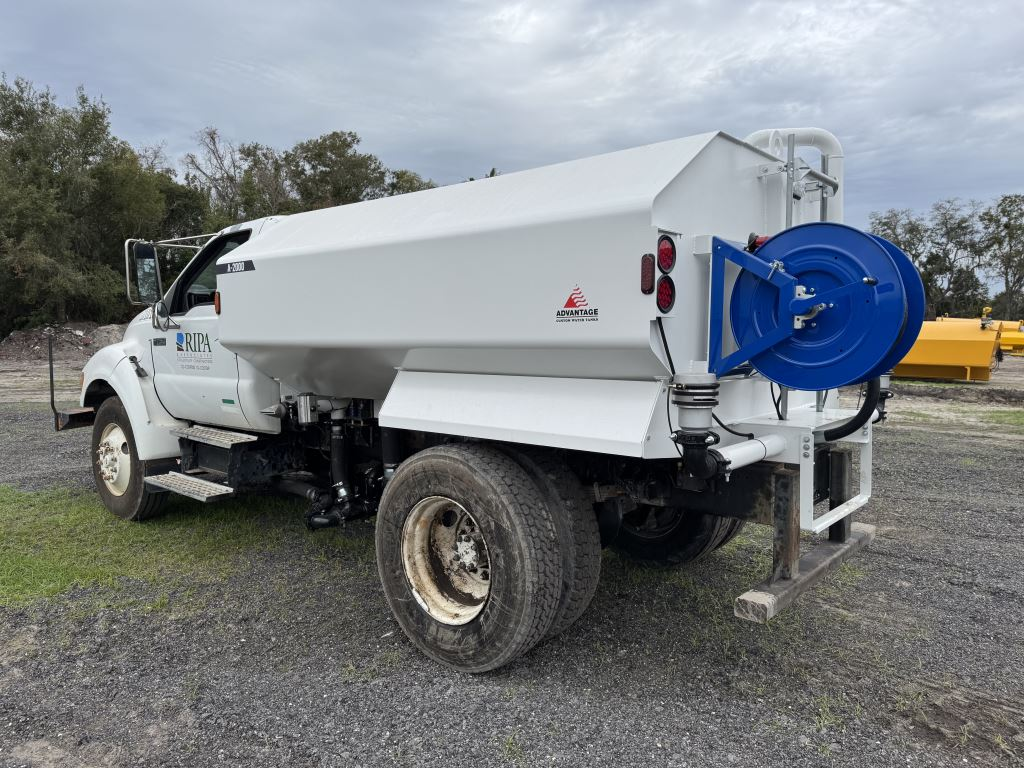
Advantage Water Tanks manufactures custom steel water tanks and understands multi-site construction operations. When planning fleet additions, including them in your conversation about capacity needs, standardization, and site-specific requirements helps ensure your equipment selections align across all your projects.
When you’re planning fleet additions, bring your full project portfolio, growth plans, and operational requirements to the conversation. Equipment providers who understand your entire picture can help you make choices that work across all your projects, not just the next one.
Frequently Asked Question
How much buffer capacity do we actually need?
Most multi-site operations maintain 15-20% buffer capacity above peak combined demand. This accounts for maintenance downtime and unexpected demand spikes. If your peak demand is 15,000 gallons, maintaining 18,000 gallons of total capacity is reasonable.
What if our projects have conflicting peak demand periods?
That’s ideal. Projects peaking at different times reduce total required capacity. A June-peak project and an August-peak project need less combined capacity than two August-peak projects.
Should we standardize all our tanks?
Most multi-site companies benefit from standardizing 80-90% of their fleet. Pick one or two core configurations. Customize only when a specific site requirement justifies it.
How do we handle equipment movement between projects?
Plan transitions in your project schedule. Know when current projects end and new ones start. Budget time for equipment movement, installation, and commissioning between sites. Verify that equipment actually works at destination sites before committing to moves.
What if we have too much capacity for some periods?
That’s better than too little. Carrying some excess capacity is more cost-effective than rationing water on active projects or renting emergency capacity at premium rates. Accept that your fleet will sometimes be underutilized.
How often should we update our capacity plans?
Review your total fleet needs quarterly when your project portfolio changes. Update purchasing plans annually based on realistic project pipelines. Adjust immediately if major projects start, end, or change scope unexpectedly.