
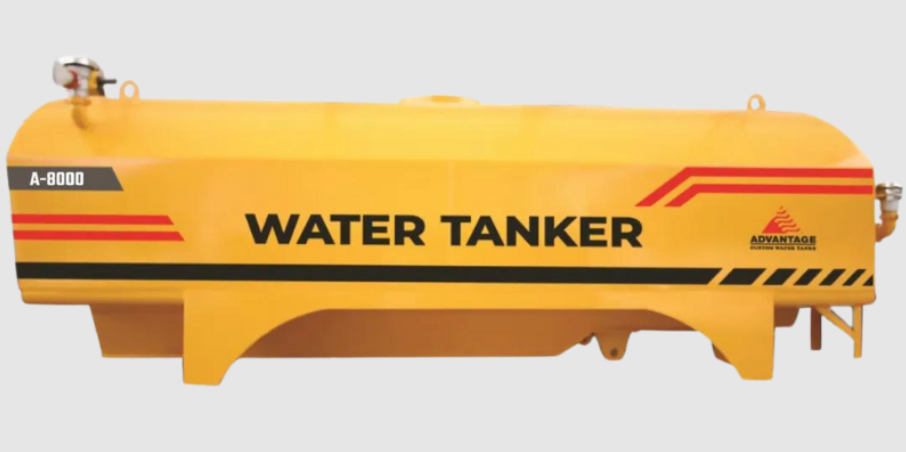
When selecting water tanks for your construction fleet, the distinction between articulated and rigid frame systems can significantly impact your operational costs, project efficiency, and equipment lifespan. This guide breaks down the key differences to help construction managers make informed purchasing decisions.
Understanding the Two Main Water Tank Systems
Water tanks for construction equipment are categorized into two primary types based on their mounting chassis design. Each type serves different operational needs and project requirements.
Articulated water tanks mount on articulated dump trucks with flexible chassis designs. These systems typically range from 5,000 to 9,000 gallons and excel in tight spaces and rough terrain.
Rigid frame water tanks are mounted on traditional truck chassis and handle larger volumes, typically ranging from 10,000 to 24,000 gallons. These tanks maximize water capacity for large-scale operations.
Capacity Ranges and Applications
Articulated Water Tank Specifications
Articulated systems typically handle 5,000 to 9,000 gallons, making them ideal for:
- Road construction projects with limited access
- Residential development sites
- Quarry and mining operations with tight turns
- Dust control on winding haul roads
- Projects requiring frequent direction changes
The smaller capacity allows for better weight distribution and improved maneuverability on challenging terrain.
Rigid Frame Water Tank Specifications
Rigid frame systems range from 10,000 to 24,000 gallons, suitable for:
- Large-scale highway construction
- Major mining operations
- Industrial site preparation
- Long-distance water transport
- High-volume dust suppression projects
The larger capacity reduces the need for frequent refills but requires more space for operation.
Design and Operational Differences
Chassis Flexibility
Articulated Advantage: The articulated chassis allows front and rear sections to move independently. This flexibility provides excellent maneuverability in tight spaces and better traction on uneven surfaces.
Rigid Frame Advantage: The single-chassis design offers maximum stability for highway speeds and long-distance hauling. The fixed frame provides a solid platform for larger tank volumes.
Maneuverability Comparison
Articulated water tanks excel in confined spaces. The flexible chassis design enables operators to navigate tight job sites, make sharp turns, and work effectively in areas where rigid-frame trucks cannot operate.
Rigid frame tanks perform better on established roads and open areas. They provide stable, predictable handling for long hauls and high-speed transport between job sites.
Cost Considerations
Initial Investment
Articulated water tanks typically cost less upfront due to smaller tank sizes and simpler mounting systems. However, the specialized articulated chassis may have higher maintenance costs.
Rigid frame systems require a larger initial investment due to tank size and mounting complexity. The traditional chassis design often results in lower long-term maintenance costs.
Operational Costs
Fuel Efficiency: Articulated trucks generally consume more fuel per gallon transported due to the flexible chassis design and weight distribution.
Productivity Impact: Larger, rigid-frame tanks require fewer refill trips, reducing downtime and labor costs on high-volume projects.
Maintenance Requirements: Both systems require regular maintenance; however, rigid frame trucks typically have lower service costs due to their simpler chassis design.
Decision-Making Framework
Choose Articulated Water Tanks When:
- Project sites have limited access or tight spaces
- Terrain is rough, steep, or frequently changes elevation
- You need maximum maneuverability over a large capacity
- Multiple smaller loads work better than fewer large loads
- Job sites change frequently, with varying access requirements
Choose Rigid Frame Water Tanks When:
- Projects require high-volume water transport
- Job sites have good road access and open areas
- Minimizing refill trips is a priority
- Long-distance transport between water sources and job sites
- Cost per gallon transported is the primary concern
Technical Specifications to Consider
Tank Construction Quality
Quality water tanks feature welding on the inside and outside to prevent leaks and cracks. Professional manufacturers conduct all production in-house, ensuring superior quality control and consistent welding standards through precise engineering.
Look for manufacturers that offer comprehensive warranties on their artistry. A 2-year manufacturer’s warranty demonstrates confidence in build quality and protects your investment.
Manufacturing Process Standards
The best water tank manufacturers follow strict production protocols:
- All bends and breaks are performed with CNC cutting for a precise fit
- Plasma cutting for uniform welds on all piping connections
- Processing of baffles and bulkheads to exact specifications
- The capacity to produce multiple tanks simultaneously while maintaining quality
Mounting Systems
Proper tank mounting ensures load stability and prevents damage to the chassis. Quality systems distribute weight evenly across the chassis frame, maintaining adequate center of gravity for safe operation.
Tank mounting directly to the frame provides a lower center of gravity compared to elevated mounting systems. This design choice has a significant impact on vehicle stability, particularly when navigating uneven terrain or making sharp turns.
Internal Tank Design Features
Modern water tanks incorporate advanced internal features for improved performance:
Baffling Systems: Internal baffles control water movement during transport. Look for tanks with both longitudinal baffles running the full length and transverse baffles restricting side-to-side water flow.
Bulkhead Construction: The front and rear bulkheads are tied together with longitudinal baffles, providing increased structural strength and helping to maintain the tank’s shape under load.
Component Availability and Service
Choose systems with readily available replacement parts to minimize downtime. Standard components from multiple suppliers reduce maintenance costs and improve availability.
Quality manufacturers stock complete inventories of:
- Water pumps and hydraulic motors
- Spray heads and deflectors
- Valves and hydraulic components
- Hoses, fittings, and adapters
- Control systems and electrical components
Water Distribution Systems and Equipment
Spray Head Configuration Options
Different projects require different water distribution patterns. Understanding spray head options helps match equipment to specific applications.
Standard Spray Heads: Basic water distribution for general dust control and surface wetting. These systems provide consistent coverage for routine construction activities.
Adjustable Spray Systems: Variable-pattern spray heads allow operators to adjust water distribution according to current needs. This flexibility improves water efficiency and reduces waste.
Specialized Applications: Some projects require unique spray patterns, such as:
- Narrow pattern heads for precise watering
- Broad pattern heads for maximum coverage
- High-pressure heads for cleaning applications
Water Pump Systems
The pump system determines water pressure, flow rate, and overall performance. Quality water tanks include pumps that are appropriately sized to match the tank’s capacity and intended applications.
Pump Types: Most construction water tanks utilize centrifugal pumps, which are designed for continuous operation. These pumps provide reliable performance with minimal maintenance requirements.
Flow Rates: Pump sizing affects operational efficiency. Undersized pumps limit water distribution capability, while oversized pumps waste energy and may cause premature component wear.
Hydraulic vs. Air-Operated Systems
Water tank equipment operates using either hydraulic or air systems, each offering distinct advantages.
Hydraulic Systems: Provide precise control and higher operating pressures. Better suited for demanding applications that require precise water placement.
Air-Operated Systems: Simpler operation with fewer hydraulic components. Often preferred for basic dust control applications where precise control is less critical.
Making the Right Choice for Your Fleet
The decision between articulated and rigid frame water tanks depends on your specific operational requirements. Consider these factors:
- Primary job site types – Confined spaces favor articulated, open areas favor rigid frame
- Transport distances – Short hauls suit articulated, long distances favor rigid frame
- Volume requirements – High volume needs call for rigid frame systems
- Budget constraints – Consider both initial costs and long-term operational expenses
Fleet Management Considerations
Equipment Standardization: Utilizing consistent tank types across your fleet simplifies maintenance, training, and parts inventory management. However, diverse project requirements may justify a mixed fleet composition.
Operator Training: Different tank types require specific operational knowledge. Articulated systems require operators who are comfortable with handling flexible chassis, while rigid frame systems necessitate skills for maneuvering larger equipment.
Maintenance Scheduling: Plan maintenance schedules based on equipment utilization patterns to optimize maintenance efficiency. High-use equipment may benefit from more frequent inspections and preventive maintenance.
Project-Specific Evaluation
Different construction projects favor different tank configurations:
Residential Development: Typically benefits from articulated tanks due to confined spaces, underground utilities, and frequent direction changes.
Highway Construction: Often requires rigid frame tanks for long-distance transport and high-volume water needs.
Mining Operations: May use both types – articulated for working areas and rigid frame for long hauls between water sources.
Quality Standards and Manufacturing
Professional water tank manufacturers conduct all production in-house for superior quality control. This ensures consistent welding, precise engineering, and exceptional durability.
The capacity to produce multiple tanks simultaneously while maintaining quality standards indicates advanced manufacturing capabilities. Look for manufacturers with established production capacity and a proven track record of delivering on time.
Quality tanks feature:
- Double-welded construction to minimize leaks
- Precision-engineered mounting systems
- Comprehensive warranty coverage
- Complete parts availability for maintenance
Warranty and Support Considerations
Comprehensive warranty coverage protects your investment and demonstrates the manufacturer’s confidence in product quality. Standard warranty coverage should include:
Workmanship Warranty: Coverage for manufacturing defects and construction quality issues.
Component Warranties: Individual components, such as pumps, spray heads, and hydraulic motors, should carry separate manufacturer warranties.
Parts Availability: Ongoing availability of replacement parts ensures the long-term serviceability of equipment.
For construction fleet managers evaluating water tank systems, working with experienced manufacturers ensures that you receive equipment designed specifically for your operational requirements.
Need help choosing the right water tank system for your construction fleet? Contact Advantage Water Tanks at 502-716-6200 for expert guidance on articulated and rigid frame water tank solutions.