
When it comes to water trucks on construction sites, the tank itself is the heart of the operation. It’s what carries the thousands of gallons of water you need for dust suppression, soil compaction, equipment cleaning, and other essential tasks that keep your project running smoothly and safely. But not all tanks are created equal. One of the first decisions to make when spec’ing or replacing a water truck is the choice of tank material, and for most construction environments, that means deciding between steel and aluminum.
Both materials have their place in the industry, but if you’re working in the rugged, demanding conditions of a construction site, steel remains the gold standard. Aluminum has its benefits and these typically shine in specialized roles, not in the daily grind of moving massive amounts of water around busy construction sites and uneven terrain.
In this post, we’ll break down the pros and cons of each material, show why steel is the preferred choice for construction, and explain when aluminum might be worth considering.
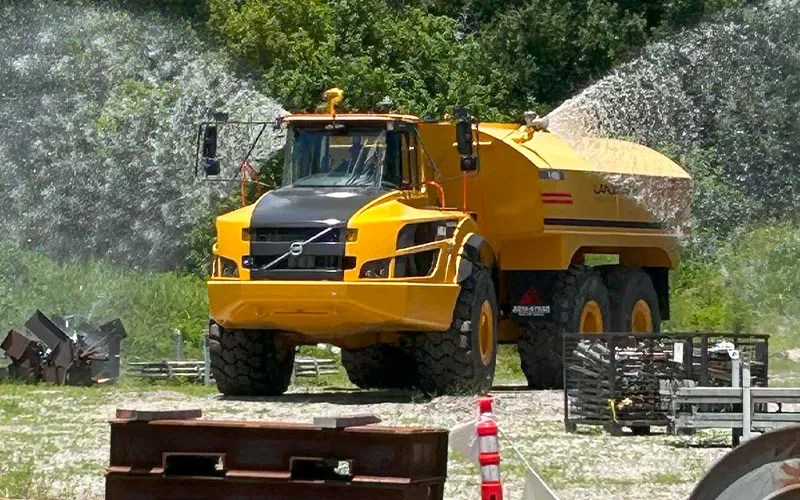
The Demands of a Construction Site
Before we compare materials, it’s important to understand the environment these tanks have to endure.
Water trucks on active construction projects face:
- Constant vibration and shock from rough, uneven ground.
- Exposure to dirt, dust, gravel, and debris that can chip paint, dent panels, and wear away protective coatings.
- Heavy loads – water weighs about 8.34 pounds per gallon, meaning a 4,000-gallon load tips the scale at over 33,000 pounds.
- Frequent use – multiple fill-and-dump cycles every day.
- Occasional impacts from other machinery or even just tight maneuvering in congested work zones.
Given these conditions, durability isn’t a “nice to have” — it’s essential.
Why Steel Is the Go-To Choice
Steel has been the standard for construction-site water truck tanks for decades, and with good reason. It offers a combination of strength, resilience, and cost-effectiveness that’s hard to beat.
1. Superior Strength and Impact Resistance
Construction sites are unpredictable, and even the best operators can’t avoid every bump, scrape, or stray rock. Steel tanks can take a hit without cracking or puncturing. They’re far less prone to structural damage than aluminum, which can dent more easily under impact.
2. Easier, More Affordable Repairs
When something does go wrong, steel is generally easier and less expensive to repair. A skilled welder can patch or reinforce a steel tank on-site or in a local shop. Aluminum repairs, on the other hand, often require specialized equipment and expertise, which can mean higher costs and longer downtime.
3. Cost-Effective Upfront
Steel tanks typically cost less to purchase than aluminum tanks. For contractors managing tight budgets and looking to maximize ROI, the lower initial investment makes steel an attractive option.
4. Better for High-Capacity Applications
Because of its strength, steel can handle the stresses of hauling large volumes of water day after day. For trucks carrying 3,000 gallons or more, steel is especially well-suited to the job.
5. Stability on Rough Terrain
The weight of a steel tank can actually be an advantage when working on uneven ground. The extra mass lowers the truck’s center of gravity, improving stability and reducing the risk of tipping, an important safety consideration on slopes and job sites with loose surfaces.
The Role of Aluminum Tanks
While steel is the clear winner for most construction environments, aluminum tanks do have their place.
1. Weight Savings
Aluminum tanks are significantly lighter than steel, which can allow for higher water capacity without exceeding legal weight limits. This can be an advantage in applications where maximizing payload is more important than withstanding daily abuse, for example, municipal water delivery or agricultural irrigation.
2. Corrosion Resistance
Aluminum naturally resists corrosion, making it a strong choice for environments where water chemistry, road salts, or other factors might accelerate rust in steel tanks. That said, modern steel tanks can be coated or lined to provide strong corrosion protection, narrowing this advantage.
3. Specialized Use Cases
Aluminum tanks are sometimes preferred in situations where the truck will be traveling long distances over paved roads with minimal exposure to heavy construction conditions. They can also be a fit for fleets operating in regions where weight limits are strict and loads are relatively light-duty.
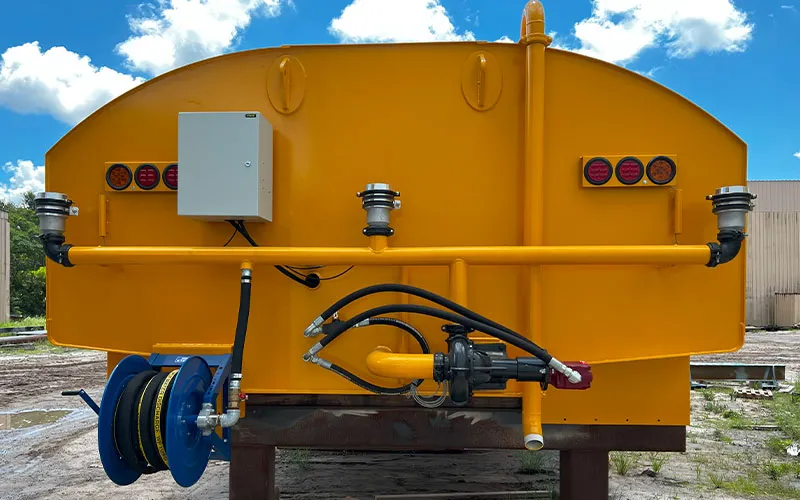
Why Steel Wins on Construction Sites
On paper, aluminum might seem appealing: lighter weight, no rust issues, but in the real world of construction, the advantages of steel almost always outweigh the drawbacks.
Here’s why:
- Downtime is expensive. If a tank gets damaged and your truck is out of commission, you lose productivity. Steel’s ruggedness and repairability keep you working.
- The job site is tough. From sharp debris to the occasional nudge from a loader bucket, construction sites are hard on equipment. Steel can absorb that punishment.
- Value over the long haul. Even if a steel tank requires occasional repainting or lining, it will generally outlast an aluminum tank in heavy-duty use.
When Aluminum Might Be the Right Choice
While we advocate for steel in almost all construction applications, there are scenarios where aluminum makes sense:
- Light-duty dust control in paved or compacted areas where the tank isn’t exposed to heavy impacts.
- Long-distance hauling where reducing weight can improve fuel economy or increase capacity within legal limits.
- Corrosive environments where specialized coatings aren’t feasible or cost-effective.
Protecting Your Investment: Steel Tank Maintenance Tips
One of the few disadvantages of steel is that it’s susceptible to corrosion if not properly cared for. Fortunately, with a little attention, you can dramatically extend the life of a steel tank.
- Apply protective coatings. A high-quality paint or epoxy liner helps prevent rust.
- Rinse after use. If your water source contains minerals or chemicals, rinsing can reduce buildup that could damage the interior.
- Inspect regularly. Check for chips, scratches, or worn areas in the coating and touch them up promptly.
- Store smart. When possible, park trucks under cover or in a shaded area to protect from sun and rain.
With these steps, a steel tank can deliver years, even decades, of reliable service.
Final Thoughts
Choosing between steel and aluminum water truck tanks isn’t just about comparing specs on paper. It’s about understanding your work environment, your operational demands, and your long-term costs.
For the rough-and-tumble world of construction sites, steel is the proven choice. It offers unmatched durability, easier repairs, and better value for high-capacity, heavy-duty use. Aluminum has its role in specialized, light-duty, or weight-sensitive applications, but for the average contractor, it’s simply not built for the daily abuse of construction work.
Hope this helps. If you ever have questions, don’t hesitate to learn more at Advantage Custom Water Tanks!