
Dust control on construction sites isn’t optional. It’s regulatory compliance, neighbor relations, and crew health all rolled into one challenge. Getting it right requires equipment that can deliver consistent coverage throughout the workday without constant refills that pull trucks off dust suppression duty.
Dust control water tanks need to match your actual operational demands, not just hold water. Tank capacity, spray system design, and refill logistics all determine whether you maintain effective dust suppression or spend the day chasing complaints and playing catch-up.
Let’s break down how to select equipment that keeps dust under control instead of letting it control your operations.
Assessing Your Dust Control Requirements
Effective dust control starts with understanding what you’re dealing with. Site conditions determine how much water you need and how often you need to apply it.
Critical assessment factors:
- Site size and active area: How many acres are generating dust?
- Soil type: Sandy, clay, or mixed composition affects water absorption
- Traffic patterns: Heavy equipment routes need frequent coverage
- Weather conditions: Temperature, humidity, and wind impact evaporation
- Work intensity: Grading generates more dust than light traffic
A 20-acre grading project on sandy soil in dry conditions demands different equipment than a 5-acre paving operation on compacted clay. Honest site assessment prevents undersizing equipment that can’t keep up.
Soil type particularly matters. Sandy soil absorbs water quickly and dries fast. Clay soil holds moisture longer. Traffic intensity affects both coverage frequency and water consumption. Weather compounds every other factor – hot, dry, windy days can double your water needs compared to cool, humid conditions.
Calculating Daily Water Volume Needs
Once you understand site conditions, calculate how much water you actually need to maintain dust control throughout a full work shift.
Start with the area requiring coverage. Measure active haul roads, work zones, and any other locations generating dust. For roads, calculate length times width. For work areas, measure the total square footage of disturbed ground.
Application rates vary by conditions, but typical ranges help establish baselines. Haul roads might need 0.2 to 0.3 gallons per square yard per application. Work areas often require 0.1 to 0.2 gallons per square yard. Applications happen 2-4 times daily, depending on conditions and traffic.
Example calculation:
- Haul road: 2,000 feet long, 20 feet wide = 40,000 square feet (about 4,400 square yards)
- Work area: 200 feet by 300 feet = 60,000 square feet (about 6,700 square yards)
- Road application: 4,400 yards × 0.25 gallons × 3 times daily = 3,300 gallons
- Work area application: 6,700 yards × 0.15 gallons × 2 times daily = 2,010 gallons
- Total daily need: approximately 5,300 gallons
This calculation provides a baseline. Adjust upward for sandy soil, hot weather, or high wind. Adjust downward for clay soil, cool, humid conditions, or light traffic. The goal is realistic planning, not perfect precision.
Matching Tank Capacity to Minimize Refill Downtime
Your calculated daily water needs determine what tank capacity makes operational sense. The key consideration isn’t just total volume but minimizing non-productive refill time.
Every refill means your water truck isn’t applying dust control. If refills take 30 minutes, including travel to the water source, two refills daily equal an hour of lost coverage time. On dusty sites, that hour creates gaps where dust control lapses and complaints arise.
Capacity options and considerations:
On-road water tanks typically hold 2,000 to 4,000 gallons, suitable for smaller sites or operations with convenient water access. These work well when refills happen quickly and don’t significantly interrupt coverage.
Articulated water tanks range from 5,000 to 9,000 gallons, providing extended operation between refills. This capacity suits medium to large sites where reducing refill frequency improves operational efficiency.
Rigid frame water tanks hold 10,000 to 24,000 gallons for large-scale operations where maximizing capacity reduces downtime. These serve extensive sites where water sources are distant or difficult to access.
Match your calculated daily needs to available capacity, factoring in refill logistics. If you need 5,300 gallons daily and have a convenient water source, a 4,000-gallon tank with two refills might work. If water access is difficult, an 8,000-gallon tank that reduces refills to once daily delivers better operational flow.
Spray System Configurations for Different Scenarios
Tank capacity matters, but how you apply that water determines dust control effectiveness.
Spray system considerations:
Rear spray bars create wide coverage patterns ideal for watering roads and large flat areas. Multiple spray heads spread water evenly across the travel path.
Side spray bars supplement rear coverage, allowing you to water adjacent areas without additional passes. This works well for covering work zone edges or areas you can’t drive through.
Water cannons deliver long-range coverage for spraying stockpiles or reaching across barriers. They use more water per minute but eliminate the need to position trucks in specific locations.
The right configuration depends on your primary dust sources. Road-heavy operations benefit from robust rear spray bars. Sites with scattered work zones need flexible systems combining bars and cannons.
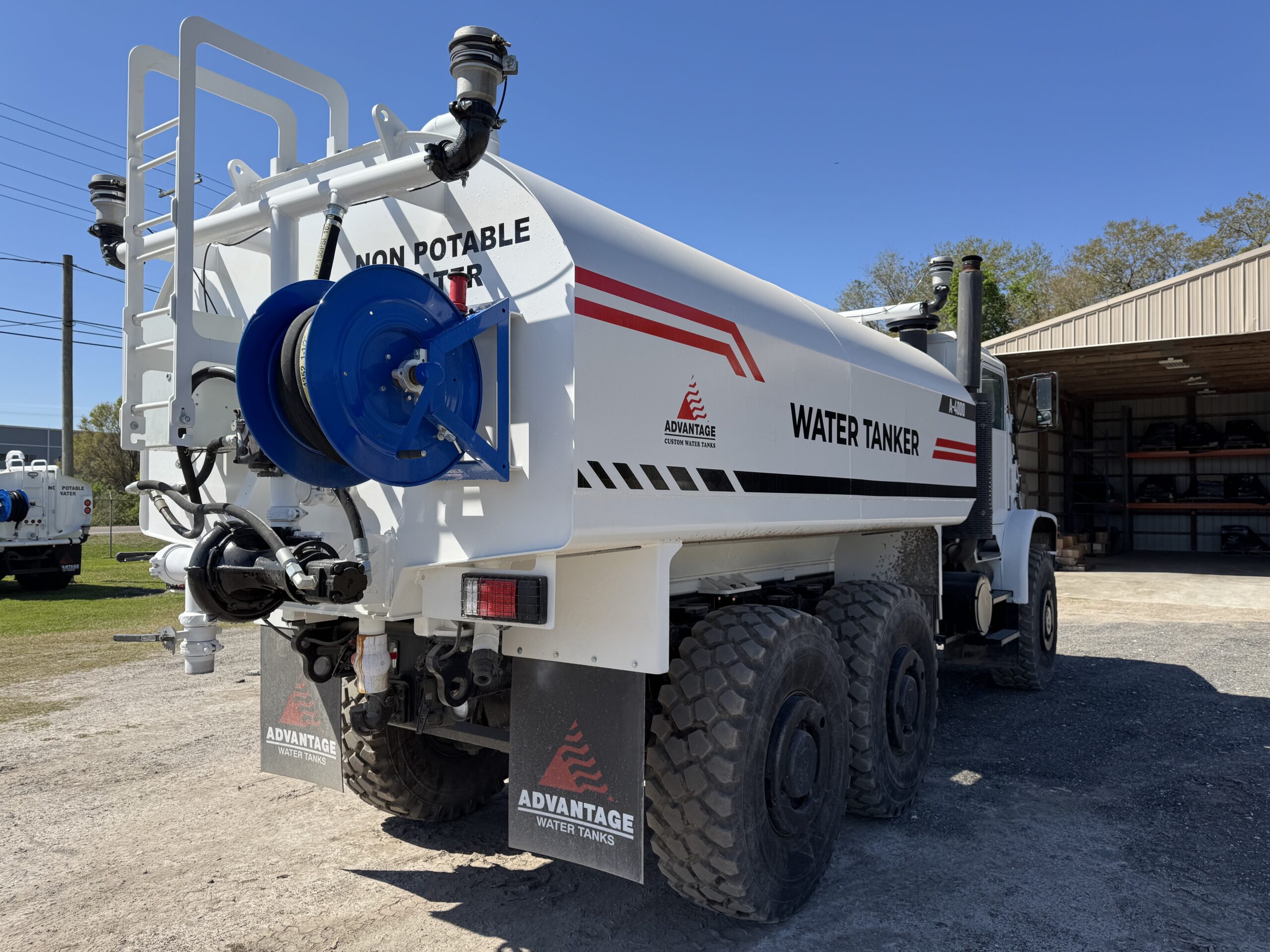
Equipment like spray heads, pumps, and hydraulic motors determines system performance and needs adequate capacity for your site demands.
Preventing Dust Complaints and Regulatory Issues
Proper tank sizing directly affects your ability to maintain consistent dust control, which determines whether you face complaints and violations.
Undersized equipment creates predictable problems. You run out of water before covering everything, forcing choices about what gets watered. Dust from uncovered areas generates complaints and regulatory scrutiny. Operators spend excessive time refilling instead of controlling dust.
Right-sized equipment maintains coverage throughout the shift. You complete planned routes without running dry. Dust stays suppressed consistently.
Risk factors from inadequate capacity:
- Coverage gaps allow visible dust plumes that trigger complaints
- Inconsistent suppression fails regulatory expectations
- Operator frustration from equipment limitations affects performance
- Reputation damage from being known as “the dusty site”
Properly sized dust control equipment costs less than violations, project delays, or reputational damage from constant dust problems.
Special Considerations for Heavy Dust Environments
Some projects face particularly challenging dust conditions requiring extra attention to equipment selection.
Demolition sites generate fine particulate matter that becomes airborne easily, needing aggressive water application and sufficient capacity for near-constant coverage.
Mining operations deal with large areas and heavy traffic. Tank capacity must match operational scale with enough volume for extensive haul roads and work areas.
Sites near schools, hospitals, or residential areas face lower tolerance for dust incidents. Equipment must deliver consistent control with minimal coverage gaps.
Hot, arid climates with persistent wind create the most demanding conditions. Water evaporates rapidly, and wind carries dust long distances. These environments require generous capacity sizing.
Selecting Equipment for Your Specific Needs
Dust control water tanks selection starts with calculating your actual water needs based on site size, soil type, traffic, and weather. Tank capacity should accommodate those needs while minimizing refill downtime that interrupts coverage.
Consider these factors when evaluating options:
- What’s your daily water volume requirement for complete coverage?
- How far is your water source, and how long do refills take?
- What spray system configuration matches your primary dust sources?
- Do you have a budget for optimal capacity or need to work within constraints?
- Could multiple smaller trucks provide better coverage than one large unit?
The answers point toward equipment that handles your dust control reality. Don’t undersize to save money upfront if it means constant operational struggles. Don’t oversize beyond what your sites actually require. Match equipment to need.
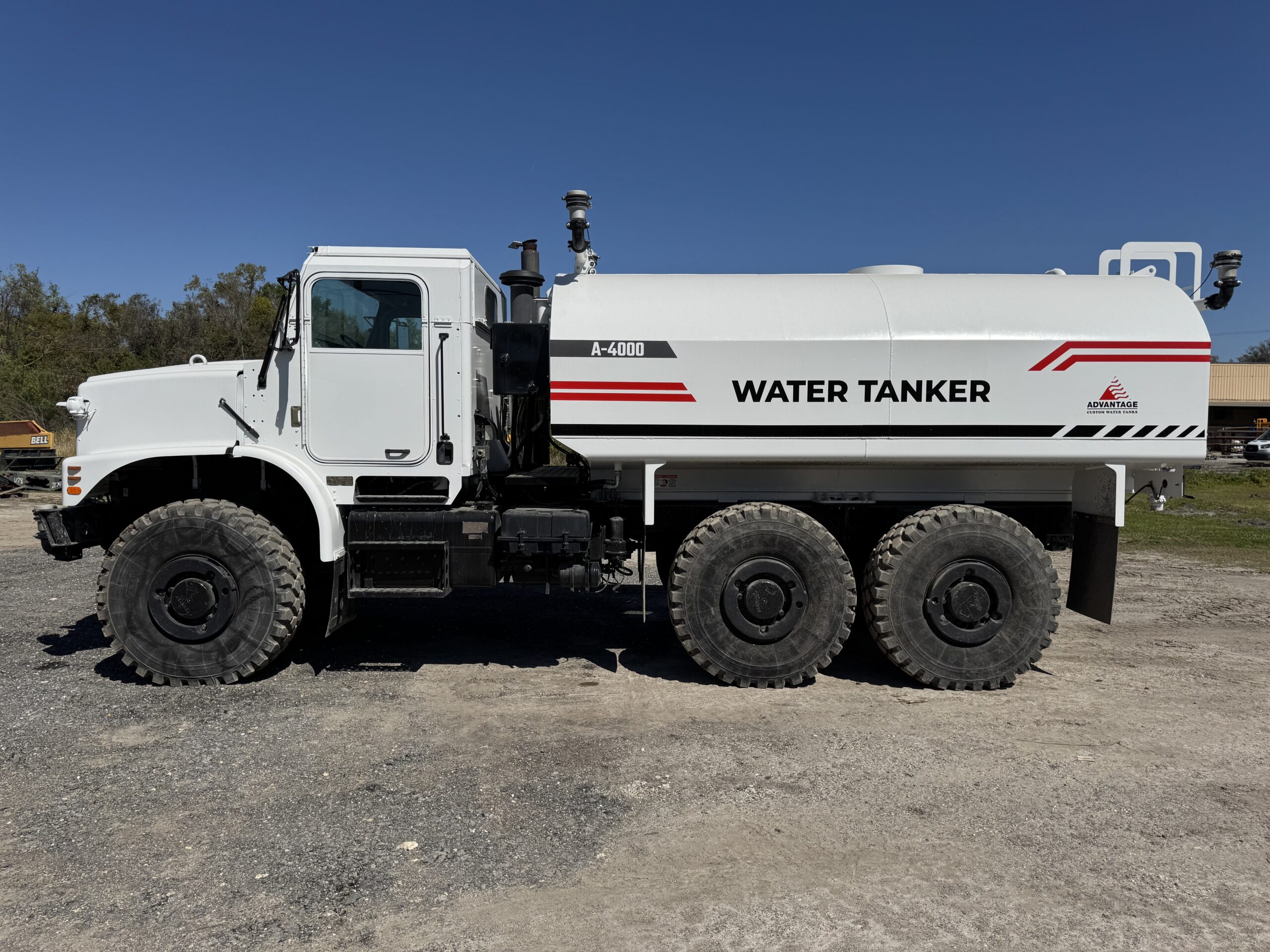
At Advantage Water Tanks, tanks are designed for specific chassis types with capacities ranging across all operational scales. Tanks are welded inside and out to minimize leaks, keeping water contained for dust control rather than leaking away.
Facing challenging dust control conditions? Contact Advantage Water Tanks to discuss your specific site requirements and how tank capacity and spray system design can deliver effective dust suppression for your operational needs.
Frequently Asked Questions
How do I calculate the right water tank size for my construction site?
Measure total area requiring dust control, estimate application rates based on soil type (0.1-0.3 gallons per square yard), multiply by daily application frequency (typically 2-4 times), and add 15-20% buffer. Compare total daily needs to available capacities and refill logistics. Match tank size to your calculated needs while minimizing refill interruptions.
What tank capacity handles a 10-acre construction site?
It depends on soil type, traffic, and weather. A 10-acre site might need 3,000-5,000 gallons daily with moderate conditions, or 8,000-12,000 gallons with sandy soil, heavy traffic, and hot weather. Calculate based on your specific conditions rather than site size alone. Factor in whether you’re covering active work areas continuously or just maintaining roads.
Can one water truck handle multiple construction sites?
Potentially, if sites are close together and water demands allow. Calculate combined water needs, add travel time between locations, and assess whether one truck can complete necessary coverage without gaps. Multiple small sites with convenient water access work better for single-truck coverage than distant sites requiring extensive travel.
How does soil type affect water tank size requirements?
Sandy soil requires a larger capacity because water drains quickly. Clay soil needs less volume but careful application. Sandy sites might need 40-50% more water than clay sites for the same coverage area. Match tank capacity to your soil type’s water retention characteristics rather than using generic sizing.
What spray system works best for large earthwork projects?
Large earthwork projects benefit from rear spray bars providing wide coverage, supplemented by side bars for work zone edges. Water cannons help reach stockpiles and areas you can’t drive through. Match spray configuration to your primary dust sources – prioritize bars for haul roads, add cannons for scattered work areas.